The Ultimate Guide to Buying Natural Building Stone
The Ultimate Guide to Buying Natural Building Stone: From Selection to Installation
Natural building stone has been used for centuries as a symbol of durability, beauty, and architectural excellence. From ancient monuments to modern luxury projects, natural stone remains one of the most trusted and desirable construction materials worldwide.
However, buying the right natural building stone is not a simple task. It requires technical knowledge, aesthetic judgment, and an understanding of sourcing, processing, and installation methods. This comprehensive buying guide , prepared by Stoneva , walks you through every step — from choosing the right stone type to executing a flawless installation.
In addition, we explore the growing role of Iranian natural stone in global markets , particularly exports to Africa and Eastern Europe , where demand for high-quality stone continues to rise.
What Is Natural Building Stone?
Natural building stone refers to stone materials extracted directly from quarries and processed for use in construction and architectural projects. Unlike artificial alternatives, natural stone offers:
- Unique textures and colors
- Exceptional durability
- High resistance to weather and wear
- Timeless aesthetic appeal
Common applications include facades, flooring, wall cladding, staircases, landscaping, and luxury interior finishes.
Popular Types of Natural Building Stone
Choosing the right type of stone depends on climate, application, budget, and design goals.
2.1 Marble
Marble is known for its elegance and smooth texture. It is widely used in interior flooring, walls, and decorative elements.
Advantages:
- Luxurious appearance
- Wide range of colors
- High market value
Considerations:
- Requires proper sealing
- Less suitable for high-traffic outdoor areas
2.2 Granite
Granite is one of the hardest natural stones, ideal for both interior and exterior use.
Advantages:
- Extremely durable
- Resistant to scratches and moisture
- Suitable for heavy-traffic areas
2.3 Travertine
Travertine is a popular choice in Mediterranean and modern architecture.
Advantages:
- Warm, natural tones
- Excellent for facades and flooring
- Cost-effective compared to marble
2.4 Limestone
Limestone offers a soft, uniform appearance and is often used in classic architectural designs.
Key Factors to Consider When Buying Natural Stone
3.1 Application Area
Always define where the stone will be used:
- Exterior facade
- Interior flooring
- Wet areas
- High-load surfaces
Each application requires specific physical properties.
3.2 Climate Compatibility
Stone performance varies depending on weather conditions. For example:
- Freeze-resistant stone for cold regions
- Low water absorption stone for humid climates
This is particularly important for export projects in Africa and Eastern Europe .
3.3 Finish and Surface Treatment
Stone finishes include:
- Polished
- Honed
- Bush-hammered
- Tumbled
Each finish affects slip resistance, maintenance, and visual impact.
3.4 Quality Standards
Check for:
- Uniform thickness
- Color consistency
- Low fracture rate
- International quality certifications
At Stoneva , all stones undergo strict quality control before delivery.
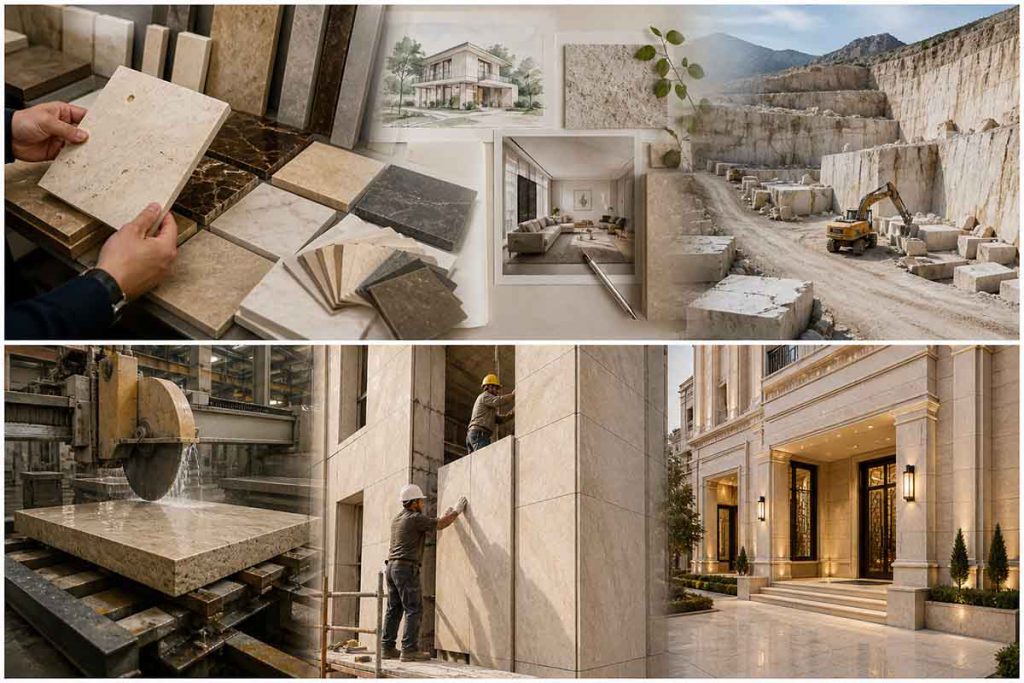
From Quarry to Project: The Stone Selection Process
Professional stone suppliers manage the entire supply chain:
- Quarry selection
- Block extraction
- Cutting and processing
- Surface finishing
- Packaging and export
Iran is one of the world’s richest regions in natural stone resources, offering over 1,500 active quarries with premium marble, travertine, and limestone varieties.
Installation: A Critical Step for Long-Term Performance
Even the best stone can fail if improperly installed.
Best Practices:
- Use professional installers
- Apply appropriate adhesives
- Allow expansion joints
- Seal stone surfaces properly
Stoneva provides technical guidance to ensure correct installation for international projects.
Maintenance and Longevity
Natural stone is an investment. Proper maintenance ensures decades of beauty and durability.
Maintenance Tips:
- Regular cleaning with neutral products
- Periodic sealing
- Avoid acidic chemicals
Iranian Natural Stone in Global Markets
7.1 Why Iranian Stone?
Iranian natural stone is globally recognized for:
- Competitive pricing
- High-quality raw materials
- Unique color patterns
- Advanced processing technologies
7.2 Stone Export from Iran to Africa
African markets increasingly demand durable and cost-effective building materials. Iranian stone is widely used in:
- Commercial buildings
- Residential complexes
- Infrastructure projects
Stoneva has successfully supplied stone to countries such as Kenya, Tanzania, and Nigeria.
7.3 Stone Export from Iran to Eastern Europe
Eastern European countries value:
- Architectural consistency
- Frost-resistant stone
- Affordable luxury materials
Iranian travertine and granite are popular choices in countries like Poland, Romania, and Bulgaria.
Stoneva handles logistics, customs documentation, and international standards compliance , ensuring seamless export operations.
Why Choose Stoneva?
Stoneva is a trusted natural stone supplier with a strong international presence.
What Sets Stoneva Apart:
- Direct access to top Iranian quarries
- Custom cutting and finishing
- Export expertise to Africa and Eastern Europe
- Competitive pricing without quality compromise
- Professional consultation from selection to installation
Conclusion
Buying natural building stone is a strategic decision that impacts both aesthetics and structural performance. With the right knowledge and a reliable supplier, natural stone can elevate any project to a timeless architectural statement.
Stoneva combines premium Iranian natural stone resources with global export expertise, helping clients worldwide achieve outstanding results — from selection to installation.
If you are looking for a professional partner in natural stone sourcing and export , Stoneva is your trusted solution.